
Prostate is a chestnut-sized gland found in males and is an essential part of the male reproductive system. It consists of fair amount of muscle tissue giving it firmness. The gland is situated directly below the neck of the bladder and in front of the rectum.
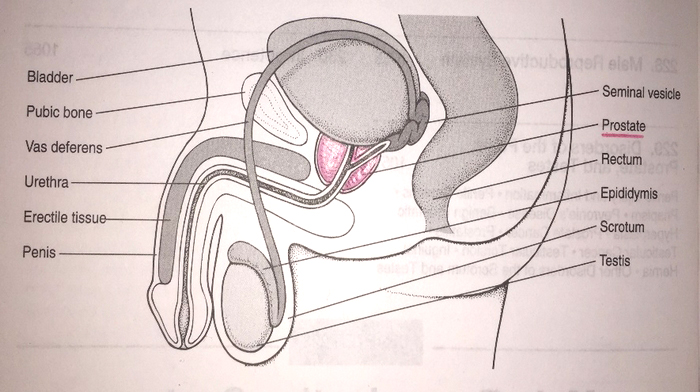
The prostate produces a fluid that is stored in seminal vesicles that mixes with sperms from testicles to create semen. During copulation, the muscle tissue helps to ejaculate the semen into the urethra. The urethra runs from the bladder through the prostate gland. The urethra is thus a conduit for both semen and urine.
The cells of the prostate uniquely produce a protein called Prostate Specific Antigen (PSA) which circulates in the blood. The blood level of PSA is often elevated in conditions such as prostate cancer, Benign Prostatic Hyperplasia (BPH), which is enlargement of the prostate and in prostatitis which is the inflammation of prostate. While there is no evidence to suggest that either BPH or prostatitis leads to cancer, but the possibility of developing prostate cancer in man with these conditions cannot be ruled out.
The prostate gland tends to enlarge after the age of 50. The exact cause for this is not known, but it can reasonably be attributed to hormonal changes accompanying the advancing age. The enlarged prostate physically compresses the urethra, thus constraining the flow of urine and create frequent urgent need to empty the bladder, often with difficulty.
Any of the conditions that result in enlargement of the prostate can show elevated blood levels of PSA. For this reason, to arrive at a definite diagnosis, PSA test should be carried out in conjunction with Digital Rectal Examination (DRE) by doctor. In DRE the doctor inserts finger through rectum and assesses
the size, tenderness and lumpiness of the prostate gland. A biopsy test is done for confirmation of the prostate cancer.
Although the prostate cancer is one of the most prevalent cancer in men, the mortality, at less than 3% of the affected cases, is low. Early diagnosis is of the utmost urgency. The cancer can be treated in a variety of ways, surgery, hormone therapy chemotherapy, radiotherapy, cryotherapy depending on clinical assessment. As the prostate cancer is slow growing, elderly patients, on advice of doctors may decide to delay treatment. In the event of prostatectomy (removal of the prostate gland) the blood PSA level should fall to zero; presence of the PSA levels in blood following the procedure suggest either the prostatectomy was not complete or the cancer has metastasized.
An enlarged prostate can cause urinary in continence and, erectile dysfunction and reduced sex drive. Treatments and therapies are available to mitigate the effects of an enlarged prostate.
In prostatitis, the cause of inflammation may be infection which is often treated with antibiotics or in more severe cases with surgery. Cranberry juice is often taken as it prevents particles and bacteria from adhering to the lining of the uterine tract. The effectiveness of cranberry juice is thought to be due its high content of D-mannose, indeed the latter appears to be the active component. D-mannose, in capsule or powder form is suitable for both men and women.
Doctors may prescribe Alpha-blockers for enlarged prostate to relax muscles around the urethra to ease the flow of urine. Another possible treatment is the use of 5α-reductase inhibitors. The inhibitors control the conversion of testosterone to dihydrotestosterone (DHT). The prostate shrinks when the DHT level decreases. The option of surgery is available for some men who may find it more beneficial.
Life-style changes, food supplements are also widely used to mitigate the effects of an enlarged prostate, be it cancerous, benign or inflamed.
Frequent urination during enlarged prostate is an irritation and may tempt men to drink less fluid or/hold back call of nature. Neither is advisable. Holding back urine may infect the urinary tract and may even damage the kidneys. It is always advisable to drink plenty of water or fluids to stay hydrated. Pomegranate juice is recommended due to its high contents of antioxidants that may have an inhibitory effect on the proliferation of cancerous cells.
The role of regular exercise as an adjunct to medicine should never be underestimated. Countless studies and anecdotal experiences testify to this. Daily brisk walk for 30 minutes is likely to slow down the progression of the cancer, quite a benefit in an already slow growing cancer. Further benefit can be had by additionally doing Kegel exercise for men to strengthen pelvic floor muscles.
Multitudes of supplements for prostate support, based on traditional use, are widely available over the counter, either as single ingredient or as a balanced formulation of multiple ingredients. Chief among them include Saw palmetto, Pygeum, β-Sitosterol, Rye grass pollen extract. Often the formulations also include Zinc, Pumpkin seeds. More recent studies have found association between high vitamin D deficiency and increased risk of prostate cancer, particularly in younger generation. Vitamin D supplementation was found to lower the PSA blood levels.
Nutritional supplements do have a positive role in healthcare management, but they are not meant to either treat or cure diseases. As the name suggests, they are supplements; they supplement the inadequacy of our diet and life-style choices. Just as a car owner understands the nuances of the workings of his car, we ought to familiarise with the workings of our own body and be able to make professionally informed and judicious choices in the management of our health.